Numbers about blogging are easy to find and hard to trust. Half the roundups quote each other in a circle, and the figures that reach your screen have often been laundered through three blogs before anyone checks the date on the original. This page is my attempt at the opposite: the numbers that matter to anyone running or starting a blog in 2026, each one sourced, dated, and checked against the source that published it first.
I run a small template studio in Vilnius and I have sold blog templates since 2013, so a few of these numbers come from my own shop and my own price audit. Those are marked as studio data. Everything else names its origin. Market figures are refreshed twice a year.
_Last updated: 4 November 2026._
Key blogging statistics for 2026 (the short version)
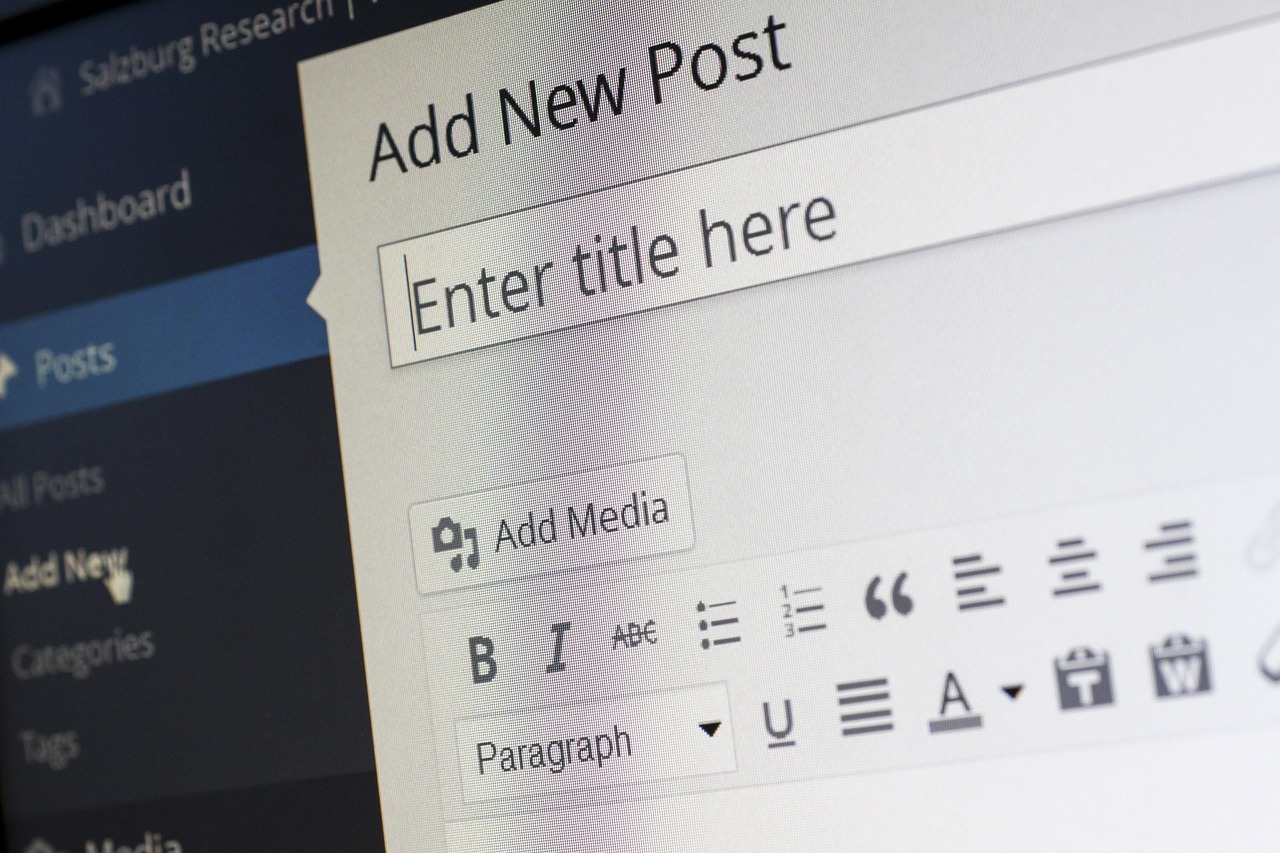
- WordPress powers 40.7% of all websites on the internet. _(W3Techs, September 2026)_
- ThemeForest alone lists 3,842 blog WordPress themes, and the Creative Market blog category lists thousands more. _(Marketplace category counts, retrieved November 2026)_
- I checked 61 blog template prices: the median is $54 on marketplaces and $179 at independent theme shops, a 3.3x gap. _(Studio price audit, October to November 2026)_
- The average blog post runs 1,312 words and takes 3 hours 20 minutes to write, both down from 2023 peaks. _(Orbit Media 2026 survey, 1,042 respondents)_
- Only 13.9% of bloggers say their blog delivers strong results. _(Orbit Media, 2026)_
- 96.55% of web pages get zero organic traffic from Google. _(Ahrefs study of a 14-billion-page index)_
- 68% of Google searches in early 2026 ended without a click to any website. _(SparkToro, June 2026)_
- Only 14% of bloggers earn any income from their blogs, and about 2% clear $100,000 a year. _(Colorlib, 2025)_
- Organic search drives 53% or more of blog traffic, against 5 to 8% from social media and 3 to 5% from email. _(Colorlib; HubSpot)_
- The average blog takes 22 months to earn its first money. _(Productive Blogging Income Survey, 2026)_
A note on our data

Three kinds of numbers live on this page. Public statistics come from named research (Orbit Media, Ahrefs, Pew Research Center, W3Techs, HubSpot, Colorlib and others) and each carries its publisher and date. Studio data comes from my own business: the template price audit below is my count of listed prices in October and November 2026, and the cost figures I quote from my own shop are the real ones. Where sources disagree, I show the range and name the disagreement instead of picking a winner. The “600 million blogs” figure is the clearest example of why this matters, and I deal with it in section one.
Blogging market snapshot (as of November 2026)
- Share of all websites running WordPress: 40.7%
- Blog WordPress themes listed on ThemeForest: 3,842
- Template prices checked for this page: 61 across two marketplaces and two independent shops
- Median template price, marketplaces: $54
- Median template price, independent shops: $179
- Average blog post length: 1,312 words
- Average time per post: 3 hours 20 minutes
- Bloggers reporting strong results: 13.9%
- Share of bloggers publishing weekly: 22%
1. How many blogs are there, really?
The number you will see quoted everywhere is around 600 million blogs, usually traced to a 2022 estimate built from platform data at WebTribunal. It survives because it is round and quotable. It comes with no definition of what counts as a blog, and much of it counts dormant accounts that were abandoned after three posts. Treat any single “number of blogs” figure as a guess, including this one.
What can be measured holds up better. About 31.6% of websites are blogs by content structure (industry estimates, definitions vary), and roughly 2.5 billion blog posts are published per year worldwide (SQ Magazine compilation, 2025). WordPress alone accounts for a large share of that output. Readership claims are softer still: the widely repeated “83% of internet users read blogs” traces to marketing roundups rather than a single primary survey, so I would use it as a direction rather than a fact.
The honest summary: nobody counts blogs, plenty of people count posts, and the readership numbers are marketing math. If you need one solid anchor, use WordPress market share, because that one is measured.
2. What blog templates cost in 2026
This is the section I could not find anywhere else, so I built it. In late October and early November 2026 I checked 61 listed blog template prices: 26 on the two big marketplaces (11 on Creative Market, 15 on ThemeForest) and 33 at two independent theme shops that specialize in blog designs for hobby bloggers (25 at Restored 316, 8 of the 23 listed at 17th Avenue). Everything is the regular listed price in US dollars, before sales tax.
- All 61 prices: median $129, mean $134, range $29 to $249
- Marketplaces (26 prices): median $54, mean $68, range $29 to $179
- Independent shops (35 prices): median $179, mean $184, range $79 to $249
- 48% of all listings sit under $100, and every single one of them is on a marketplace
- The most common independent-shop price point is $249 (13 of 35 listings)
The gap is the story. A blog theme from a marketplace typically costs the price of two lunches. The same job bought from a small shop that designs only for bloggers costs about three and a half times more, and the shops price in bands: budget themes at $79 to $89, the middle at $149 to $179, the flagship tier at $249. Marketplace pricing is flatter and darker underneath, with a long tail of $29 to $49 themes from solo developers and occasional outliers like a $179 food blog theme or a $400 Showit template (a different platform with different economics entirely).
Both markets are large. On ThemeForest’s blog category, bestsellers show sales counters in the thousands (one personal blog theme shows 3,981 sales at $49), so the volume sits at the low end. The independent shops run smaller catalogs on purpose. Restored 316 lists 25 themes; 17th Avenue lists 23.
3. What the template price includes
The sticker price buys different things in the two markets, which explains part of the gap.
On ThemeForest, the regular license includes the theme files, quality review, future updates, and 6 months of support from the developer, extendable to 12 months for a fee (I saw $6.38 to $14.88 on one listing). The license covers one end product. The extended license runs roughly 25 times the price: $195 against $79 on one theme I checked, $2,000 against $29 on another.
At the independent shops, the price covers a license for one website, support from the shop’s own team, and step-by-step installation guides. Nearly all of these are child themes built on the free Kadence framework, so the buyer gets a page builder and a support forum underneath. The shops then sell the extras separately: block collections (pre-designed page sections) at $79 to $129, installation services, and customization work billed in small line items ($20 to $60 a tweak at one shop, $150 for a half hour at another). One German review of Restored 316 put the model plainly: a fixed price between $100 and $200 per theme with a lifelong right of use and no further costs.
My own shop sits in the marketplace-to-independent middle: €49 to €79 per theme, free updates forever, and a small fee if you want me to install it. The reason I know buyers care about the inclusions is my support inbox. The theme price is paid once. The updates are where the years go.
4. What a blog costs per year
Software is free and blogs are not. WordPress itself costs nothing, and a working blog still has a stack of bills under it. The figures below come from cost breakdowns published in 2026 by vendors and independent guides, and they agree on the shape while quibbling over the totals.
- Domain name: $10 to $20 a year for a .com, sometimes free for the first year with a hosting plan, and renewal is the number that matters _(Network Solutions, September 2026; WordPress.com, October 2026)_
- Hosting: $35 to $120 a year for shared hosting on an introductory rate, renewing at $150 to $250; managed WordPress hosting runs $200 to $600 _(SiteGlowUp, May 2026)_
- Theme: $0 to $200 one-time or per year (see the audit above for the real distribution)
- Common paid plugins: about $296 a year for a typical set (SEO premium at $118.80 a year as of August 2026, a page builder at $59, caching at $59) _(VeloCMS price roundup, September 2026)_
- Email tool: $0 to $468 a year depending on list size _(Lovable cost guide, 2026)_
Three real-world totals for 2026, from three different guides: a hobby blog on shared hosting with free plugins lands around $100 to $200 a year; a serious single-writer blog with managed hosting and the common paid plugins runs $600 to $900 a year; and a small-business blog with security, backups and modest maintenance lands at $1,500 to $2,500 a year. The spread is honest. Your number depends almost entirely on hosting tier and whether the theme price is a one-time buy.
Watch the second year. Introductory hosting prices expire, domain privacy renews, and the theme shop starts emailing about version upgrades. The bloggers I hear from are rarely surprised by year one and frequently surprised by year two.
5. How bloggers spend their time
Orbit Media has surveyed bloggers for over a decade, and its 2026 wave (1,042 respondents) shows a craft getting leaner. The average post is 1,312 words (down from a 1,427-word peak in 2023) and takes 3 hours 20 minutes to produce (down from 4 hours 10 minutes in 2022). 22% publish weekly. 60% include statistics in their posts, 45% add contributor quotes, and 26% add video.
Results stay scarce: 13.9% say their blog delivers strong results. Two habits correlate with the winners in that same dataset. Posts of 2,000 words or more report strong results at 39% against a 21% baseline. And updating old posts is the strongest predictor of results, beating the benchmark by 2.6 times, yet only 7% of bloggers do it, down from 25% in 2017. A cheap advantage, hiding in plain sight.
6. Where blog readers come from
Search still feeds blogs, and search is changing under them.
- Organic search drives 53% or more of blog traffic; social media delivers 5 to 8% and email 3 to 5% _(Colorlib compilation, 2025; HubSpot)_
- 96.55% of pages get zero organic traffic from Google _(Ahrefs, 14-billion-page study)_
- 68.01% of Google searches from January to April 2026 ended without a click to any website _(SparkToro, June 2026)_
- When Google shows an AI-generated summary, about 8% of searchers click through to a result, against roughly 15% without one _(Pew Research Center, 2025)_
- Click-through on queries with AI Overviews recovered from 1.3% in December 2025 to 2.4% in February 2026 _(Seer Interactive)_
Read together, the pattern is plain: the search pie holds most of the traffic and a growing slice of it never leaves Google. Bloggers who treat email and newsletters as a primary channel rather than a leftover are reading these same numbers.
7. What blogs earn
Blogging income is a long curve with a steep cliff at the front.
- 14% of bloggers earn anything from their blog; 7% make $1,000+ a month; about 2% clear $100,000 a year _(Colorlib, 2025)_
- The average blog takes 22 months to earn its first income, and about four years to reach a full-time income; 30% earn something within six months _(Productive Blogging Income Survey, 2026)_
- Median monthly income by niche: food $9,169, personal finance $9,100, lifestyle $5,174, travel $5,000 _(RankIQ, 2024)_
- Among earning bloggers: 42% earn from ads, 35% from affiliate marketing, 25% from sponsored posts, 18% from products or courses _(ConvertKit figures, via Colorlib)_
- Display ad revenue runs $8 to $25 per 1,000 pageviews _(Mediavine figures, via Colorlib)_
One caveat on the salary numbers you will find floating around. A widely shared “average US blogger salary” of roughly $103,000 comes from job-listing aggregators and describes employed content bloggers, an entirely different animal from a person running their own blog. The survey numbers above describe the second group.
8. Fonts and design in blog templates
Design data is rarer than traffic data, so this section leans on two good sources and thirteen years of looking at blog themes all day.
A Muzli study published in October 2026 counted the fonts on 2,190 websites designers loved and found that 60% set headlines and body in the same family. The most popular pairing in 2026 is one font. Second place goes to loading no web font at all. Where two typefaces do appear, the body font is usually the quiet one, and designers reach for faces the general web avoids: Inter is about nine times more common on designer sites than across the web at large.
The web at large tells the opposite story. The Web Almanac 2025 (measuring millions of pages) finds Roboto on about 10% of pages, Poppins on 6%, Open Sans on 5%, and Montserrat on 3 to 4%. Instrument Serif, free on Google Fonts and the top-ranked serif in its popularity sort, sits at 0.9% of designer sites even after a year of fashion.
For blog themes specifically, the classic formula survives: a serif heading over a readable sans body (Playfair Display over Inter, Merriweather over Open Sans, the Montserrat and Merriweather pair that shipped with the Twenty Sixteen default theme). My own studio ships two typefaces per theme and refuses a third, and I wrote up the reasoning in Fonts That Don’t Fight Your Photos. If you are choosing fonts for a blog in 2026, the data says restraint is fashionable and readability is timeless.
9. Email and newsletter benchmarks
Newsletters are where bloggers are rebuilding the audience search used to hand them.
- Average newsletter signup rate: 3.9% (median 3.1%), top quartile 6.2% _(Benchmarketing dataset, March 2026)_
- Median email performance across 3.6 million campaigns: 43.46% open, 2.09% click, 0.22% unsubscribe; senders in the Blogger category do better on clicks at 3.00% _(MailerLite benchmarks, 2025)_
- beehiiv publishers sent 28 billion emails reaching 255 million unique readers in 2025 _(company figures)_
- On Substack, more than half of new subscribers arrive through the platform’s own network rather than search _(company figures, September 2026)_
The signup benchmark is the one to measure yourself against first. If your blog converts visitors to subscribers at 3 to 4%, you are average; below 1.2% and the opt-in is the problem, not the traffic.
FAQ
How much does a blog cost in 2026? A hobby blog costs roughly $35 to $120 in year one (domain and shared hosting) and $100 to $200 a year after that. A serious single-writer blog with managed hosting and common paid plugins runs $600 to $900 a year. Small-business setups land at $1,500 to $2,500 a year.
How much does a blog theme cost? In my 61-price audit: median $54 on marketplaces (Creative Market, ThemeForest) and median $179 at independent theme shops, with a full range of $29 to $249. Marketplace themes include 6 months of support; independent shops typically charge more and include more.
Is blogging still worth it in 2026? For 13.9% of bloggers, measurably yes. For most, it is a slow asset: 22 months to first income, four years to full-time. The traffic trend (68% zero-click searches) means email and repeat readers matter more each year. Blogging compounds for people who update old posts and publish on a schedule.
How long until a blog makes money? On average 22 months for any income, about four years for a full-time income, though 30% of bloggers earn something within six months (Productive Blogging Income Survey, 2026).
How many blogs are there? The honest answer is that nobody counts them. The “600 million” figure is an estimate built on 2022 platform data with no consistent definition. Measured facts: WordPress runs 40.7% of all websites, and about 2.5 billion posts are published per year.
If none of these numbers scared you off, the practical version of starting one is How to Start a WordPress Blog in a Weekend.